Biomimetic Dentistry
We restore your tooth and not just fill it!
What is biomimetic dentistry?
Biomimetic dentistry is a set of special protocols that are followed using latest equipment and materials like Aquacare air abrasion machine, dental operating microscope, Ribbond fibers, caries detection dye, etc to restore a decayed or defective tooth, so that it regains its original properties, thereby behaving similar to or mimicking an intact natural tooth.
Our tooth is not made up of a single material. It has enamel in the outer layer, which is hard and brittle. Inside the enamel there is dentin, which gives elasticity to the tooth, thus absorbing all the stresses and forces on it. Both these two materials meet at the dentino-enamel junction, the DEJ, which itself works as a specialized tissue. Pulp is the innermost layer which supplies blood and nerves to the tooth and keeps it vital – ALIVE!
So, in the biomimetic philosophy, we replace the enamel with a composite or a ceramic material with hardness similar to intact enamel; and dentin with composite having special long and short fibers to give elasticity and strength similar to natural dentin. And just like a natural tooth, these layers are bonded to the tooth structure with special adhesives mimicking the same properties of the junction of enamel and dentin. Such a tooth will function just like a natural tooth in our mouth. So the logic is, that if our natural tooth is able to last in our mouth for years, then a biomimetically restored tooth will also last very long under similar conditions. Thus, as the name suggests, in biomimetic dentistry we restore the tooth near to its original state.
Why Traditional Fillings Often Fail
Normal fillings like GI cement, silver fillings and even composite fillings do not consider the function and biomechanics of the restored tooth and may lead to complications like sensitivity, dislodgment of the filling, pain, secondary decay and subsequently after a few years, tooth fracture, which may later require more aggressive treatments like root canal treatments and crowns or even extractions.
A tooth with a biomimetic restoration has no post-operative sensitivity and pain. It also prevents formation and propagation of cracks and deformation under stress. Such restorations conserve tooth structure and most importantly, preserve pulp vitality, as bacteria cannot enter a tightly sealed space. This avoids root canal treatment in teeth with healthy pulps. When the pulp is vital, the tooth is hydrated and thus it has enhanced natural flexibility and fracture resistance which in turn increases the life of the restoration, thus avoiding further retreatments.
With the evolution of dental adhesives and the advancements in the composite materials and techniques, biomimetic dentistry has been steadily developing since 2000 backed by expansive research and publications. Thus, biomimetic dentistry is an evidence-based approach to restore your teeth predictably. The principles of biomimetic dentistry can be applied to restorative adhesive dentistry and prosthetic dentistry.
Remember, there is no replacement to natural teeth. Not even implants can feel the same way our natural teeth do. So, before getting a root canal treatment or extracting a tooth, do visit us for another opinion.
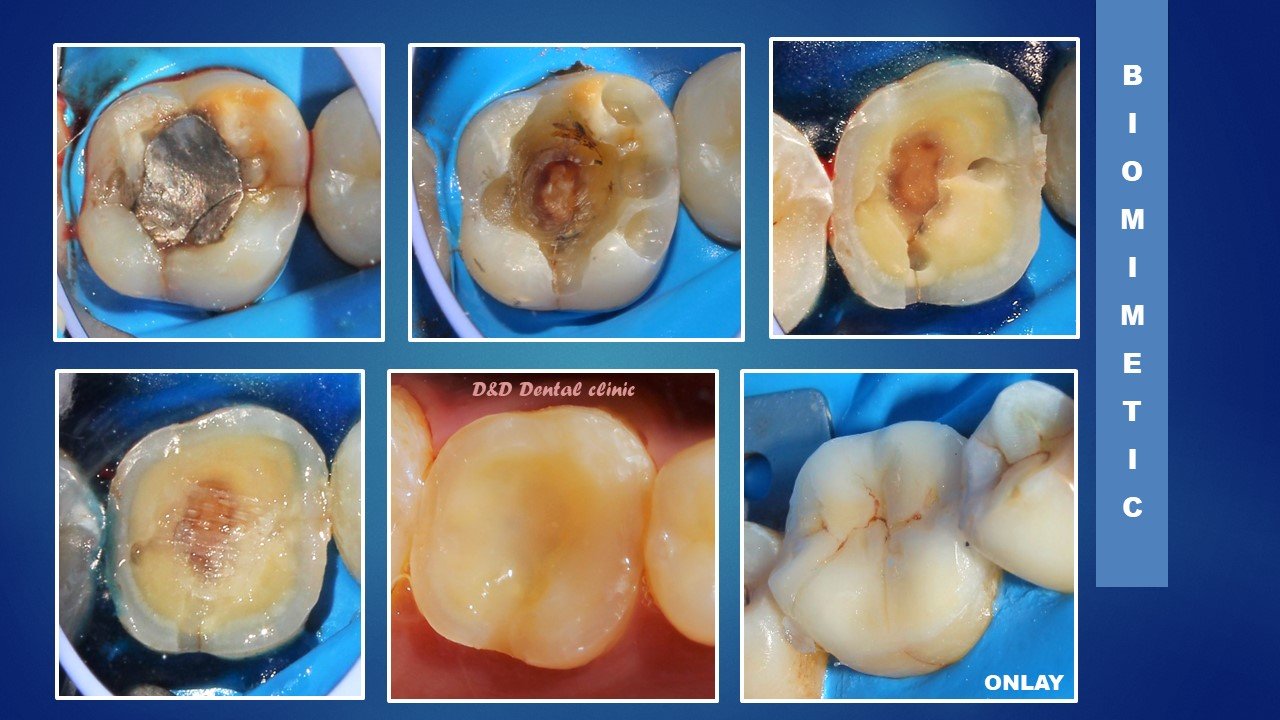 What is the procedure for biomimetic dentistry?
For all biomimetic restorations, Dr. Deepa Vaid (biomimetic restorative dentist) uses a dental operating microscope (USA) to see all defects in your teeth under enhanced magnification. All procedures are done preferably under rubber dam isolation so as to obtain a clean, saliva-free field. Special caries detector dyes from Kuraray are used to spot any remaining decay or cracks. To obtain a clean, contaminant-free tooth surface for bonding, AquaCare air particle abrasion is used. World class bonding system Clearfil SE bond from Kuraray, Japan is applied to achieve the best bond between the tooth and the restoration. Composite restorations with properties mimicking the dentin and enamel are used. Special Ribbond fibers and fiber containing composites like EverX from GC are used for better stress distribution especially in cracked teeth or in teeth with greater tooth structure loss. In cases where enamel needs to be replaced by ceramic, a no crown, conservative overlay preparations are done to preserve maximum natural tooth structure.
Who will do my biomimetic restoration?
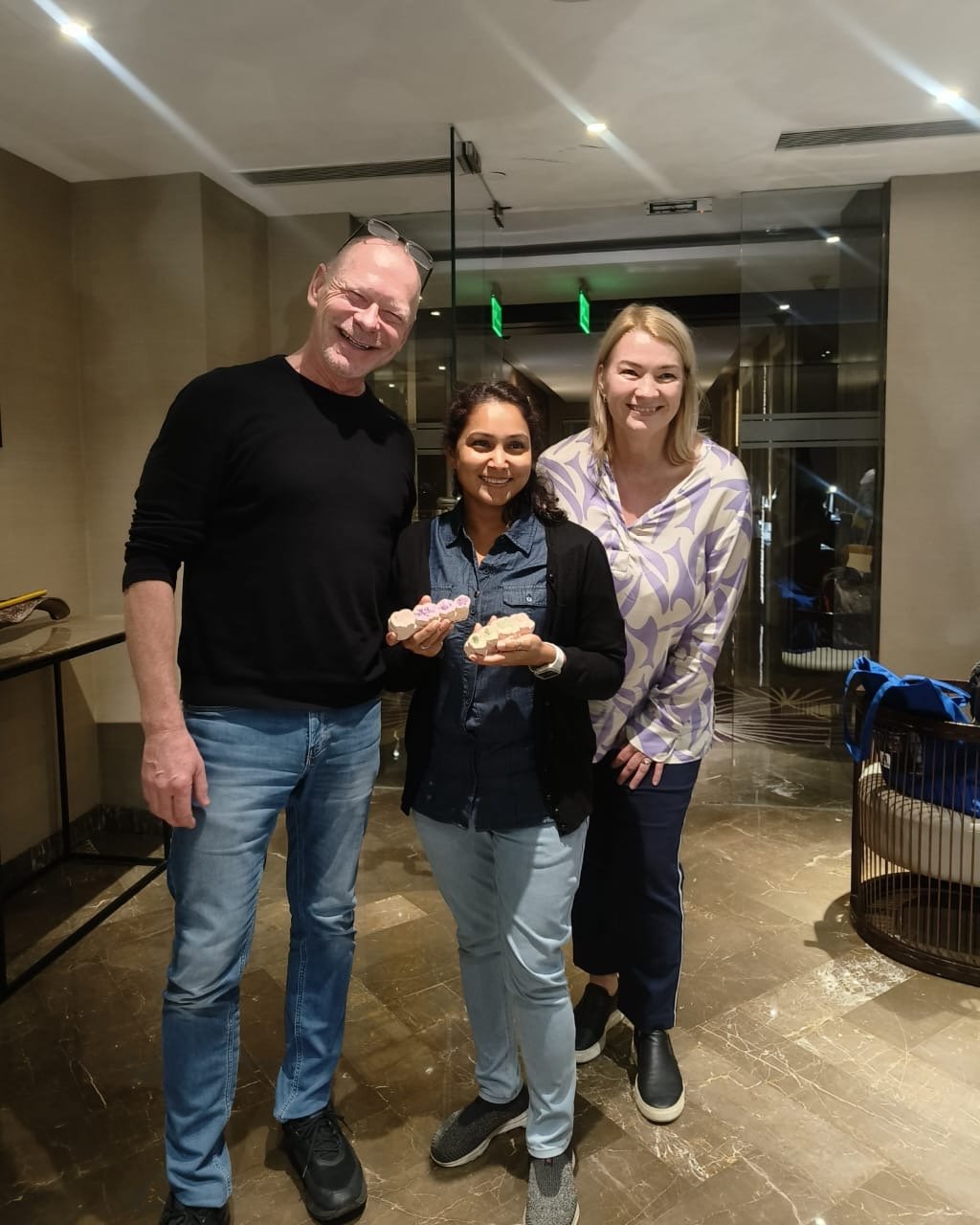
All biomimetic restorations will be done by Dr. Deepa Vaid (MDS, Conservative dentistry and Endodontics). She has specially trained in the six lessons approach to biomimetic restorative dentistry under pioneers, Dr. David Alleman and Dr. Davey Alleman in 2022 (Alleman center of Biomimetic Dentistry, USA). And since then, D&D Dental Clinic, Ahmedabad have adopted the principles of biomimetic dentistry in their daily practice, thus saving several teeth from undergoing root canal treatments and even extractions.
What is the procedure for biomimetic dentistry?
For all biomimetic restorations, Dr. Deepa Vaid (biomimetic restorative dentist) uses a dental operating microscope (USA) to see all defects in your teeth under enhanced magnification. All procedures are done preferably under rubber dam isolation so as to obtain a clean, saliva-free field. Special caries detector dyes from Kuraray are used to spot any remaining decay or cracks. To obtain a clean, contaminant-free tooth surface for bonding, AquaCare air particle abrasion is used. World class bonding system Clearfil SE bond from Kuraray, Japan is applied to achieve the best bond between the tooth and the restoration. Composite restorations with properties mimicking the dentin and enamel are used. Special Ribbond fibers and fiber containing composites like EverX from GC are used for better stress distribution especially in cracked teeth or in teeth with greater tooth structure loss. In cases where enamel needs to be replaced by ceramic, a no crown, conservative overlay preparations are done to preserve maximum natural tooth structure.
Who will do my biomimetic restoration?
All biomimetic restorations will be done by Dr. Deepa Vaid (MDS, Conservative dentistry and Endodontics). She has specially trained in the six lessons approach to biomimetic restorative dentistry under pioneers, Dr. David Alleman and Dr. Davey Alleman in 2022 (Alleman center of Biomimetic Dentistry, USA). And since then, D&D Dental Clinic, Ahmedabad have adopted the principles of biomimetic dentistry in their daily practice, thus saving several teeth from undergoing root canal treatments and even extractions.
 Frequently Asked Questions
Q: When is biomimetic dentistry recommended?
ANS: Biomimetic dentistry is recommended in all restorations or fillings. And especially in cases of deep cavities, broken or fractured teeth, replacement of old silver fillings, cracked teeth and grossly decayed teeth biomimetic restoration extend the life of natural teeth.
Q: Which dental filling should I choose?
ANS: The best dental restoration is a properly bonded biomimetic fiber composite restoration as it has properties near to that of the natural tooth.
Q: Is root canal required in all deep decays near pulp?
ANS: All deep decays do not require root canal treatments. As long as your tooth is vital and responds normally on cold testing, it is not indicated for root canal treatment. A sensitive tooth is also not an indication for root canal treatment. A tooth requiring crown or bridge also doesn’t need root canals treatment.
Q: Is rubber dam isolation necessary?
ANS: Restorations done under rubber dam isolation are recommended as without rubber dam the bond strength of the restoration reduces by 50%. However, if the patient is not comfortable with the sheet over the mouth or if rubber dam isolation is not possible in that particular case, then the procedure can be done without it using cotton roll isolation and hi-vacuum suction to control salivary flow.
Q: How long biomimetic fillings last?
ANS: Biomimetic restorations typically last for 10-15 years, compared to 7 years for traditional fillings when the patient’s oral hygiene is maintained regularly.
Q: Is it a painless treatment?
ANS: Yes. It is a painless procedure. In case of deep decays or if the patient feels sensitivity while removing decay, the tooth will be numbed with local anesthesia.
Q: Are biomimetic fillings tooth colored?
ANS: Yes, biomimetic restorations are tooth colored. We can match the shade to that of your natural teeth.
Q: What is DME?
ANS: Deep margin elevation (DME) is an additional procedure which is a part of restorative treatment, in which deep decay located below the gums and bones is restored using special matrix bands and composites to elevate the margin to a restorable level.
Q: How many sittings does a biomimetic restoration require?
ANS: A biomimetic restoration may be done in one or two sittings depending on the extent of the decay in the tooth. Each sitting will be one and a half to two hours long.
Q: Are crowns necessary in all cases?
ANS: Ceramic overlays are recommended in teeth which have cracks, gross tooth structure loss or deep decays. Overlays conserve more tooth structure than a crown. Crowns are no longer recommended.
Q: Is biomimetic dentistry better than traditional fillings?
ANS: A 100%. Biomimetic restorations have less post-operative sensitivity because of its superior bond to the tooth structure. It results in less chances of failure.
Q: What is the cost of a biomimetic restoration?
ANS: A biomimetic restoration starts from rupees 5000 and the price varies depending on the extent of the lesion, the need for DME or surgery and overlay. We believe that the cost of saving your tooth from root canal treatment and extraction should ideally be more that the cost of replacement with crown and implant.
Links to know more
Preserve Natural Teeth with Biomimetic Dentistry (Decisions in Dentistry)
Protocols of Biomimetic Dentistry (Nejad & Alleman)
Frequently Asked Questions
Q: When is biomimetic dentistry recommended?
ANS: Biomimetic dentistry is recommended in all restorations or fillings. And especially in cases of deep cavities, broken or fractured teeth, replacement of old silver fillings, cracked teeth and grossly decayed teeth biomimetic restoration extend the life of natural teeth.
Q: Which dental filling should I choose?
ANS: The best dental restoration is a properly bonded biomimetic fiber composite restoration as it has properties near to that of the natural tooth.
Q: Is root canal required in all deep decays near pulp?
ANS: All deep decays do not require root canal treatments. As long as your tooth is vital and responds normally on cold testing, it is not indicated for root canal treatment. A sensitive tooth is also not an indication for root canal treatment. A tooth requiring crown or bridge also doesn’t need root canals treatment.
Q: Is rubber dam isolation necessary?
ANS: Restorations done under rubber dam isolation are recommended as without rubber dam the bond strength of the restoration reduces by 50%. However, if the patient is not comfortable with the sheet over the mouth or if rubber dam isolation is not possible in that particular case, then the procedure can be done without it using cotton roll isolation and hi-vacuum suction to control salivary flow.
Q: How long biomimetic fillings last?
ANS: Biomimetic restorations typically last for 10-15 years, compared to 7 years for traditional fillings when the patient’s oral hygiene is maintained regularly.
Q: Is it a painless treatment?
ANS: Yes. It is a painless procedure. In case of deep decays or if the patient feels sensitivity while removing decay, the tooth will be numbed with local anesthesia.
Q: Are biomimetic fillings tooth colored?
ANS: Yes, biomimetic restorations are tooth colored. We can match the shade to that of your natural teeth.
Q: What is DME?
ANS: Deep margin elevation (DME) is an additional procedure which is a part of restorative treatment, in which deep decay located below the gums and bones is restored using special matrix bands and composites to elevate the margin to a restorable level.
Q: How many sittings does a biomimetic restoration require?
ANS: A biomimetic restoration may be done in one or two sittings depending on the extent of the decay in the tooth. Each sitting will be one and a half to two hours long.
Q: Are crowns necessary in all cases?
ANS: Ceramic overlays are recommended in teeth which have cracks, gross tooth structure loss or deep decays. Overlays conserve more tooth structure than a crown. Crowns are no longer recommended.
Q: Is biomimetic dentistry better than traditional fillings?
ANS: A 100%. Biomimetic restorations have less post-operative sensitivity because of its superior bond to the tooth structure. It results in less chances of failure.
Q: What is the cost of a biomimetic restoration?
ANS: A biomimetic restoration starts from rupees 5000 and the price varies depending on the extent of the lesion, the need for DME or surgery and overlay. We believe that the cost of saving your tooth from root canal treatment and extraction should ideally be more that the cost of replacement with crown and implant.
Links to know more
Preserve Natural Teeth with Biomimetic Dentistry (Decisions in Dentistry)
Protocols of Biomimetic Dentistry (Nejad & Alleman)